Introduction: Your Child’s Colourful World Is Full of Learning Opportunities
Think about your child’s everyday surroundings.
A bright yellow banana, a green leaf, a red toy car, a blue schoolbag or a colourful butterfly.
These ordinary objects can become wonderful learning opportunities.
Children do not need expensive educational toys or complicated learning materials to begin exploring colours.
Sometimes, a basket of colourful clothes, a box of crayons or a walk through the garden is enough to inspire curiosity.
Colours are more than something children see. They can become tools for observing, comparing, communicating, imagining and discovering the world.
As parents, we often teach children to identify red, yellow, green and blue. But colour learning can go much further than memorising names.
It can become part of everyday conversations, creative play, early mathematics, language development and practical life skills.
In this guide, we will explore ten benefits of colour-based learning and enjoyable activities that parents can try at home without turning playtime into a formal lesson.
1. Colours Support Early Cognitive Development
When children notice colours, compare objects and place similar items together, they practise important thinking skills.
Sorting a collection of toys by colour involves recognising similarities and differences.
As children grow, parents can introduce more complex challenges.
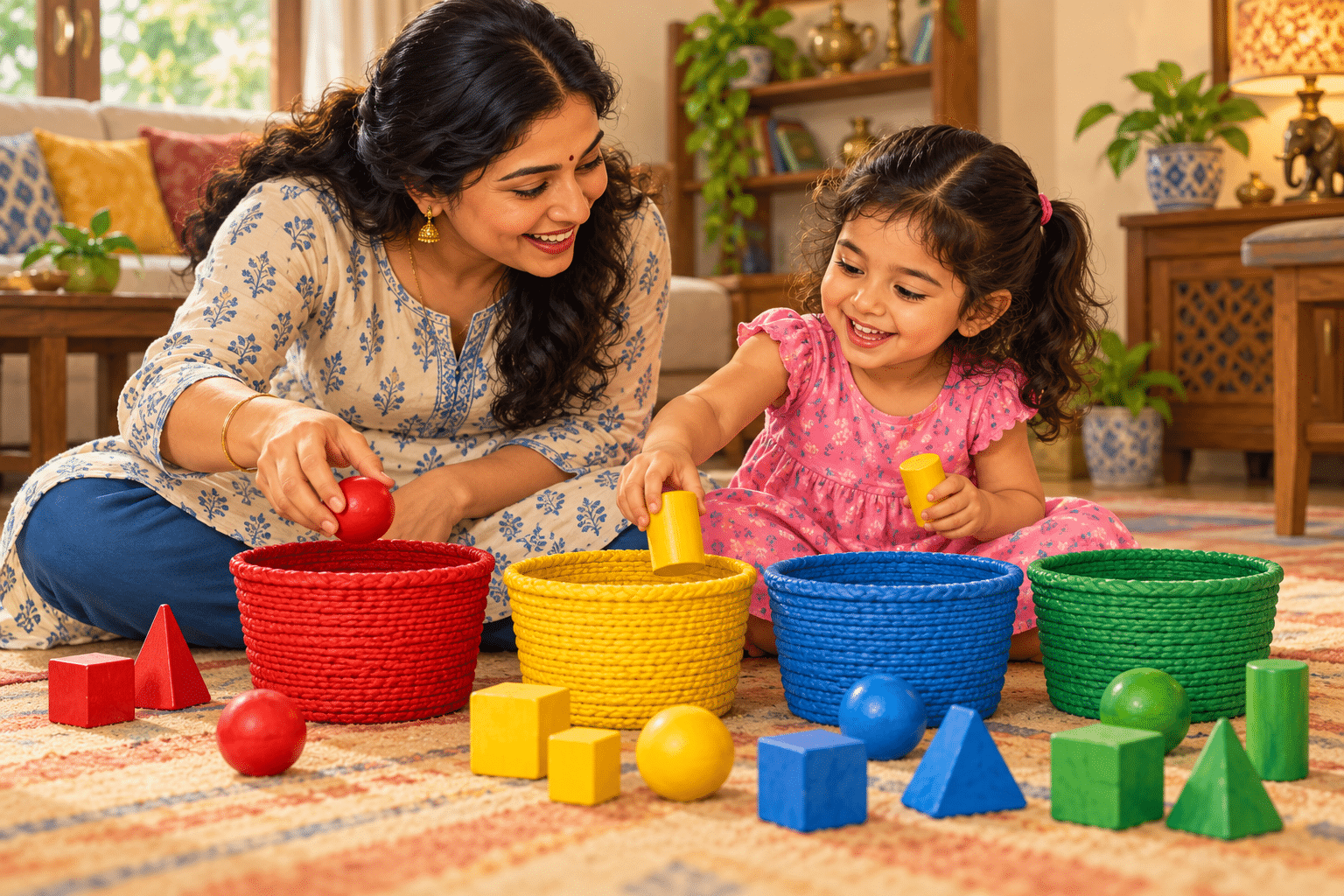
Fun Activity: The Colour Treasure Basket
Collect several safe household objects in different colours.
Ask your child to sort them into groups.
Start with two colours and gradually add more.
Try questions such as:
- Which objects belong together?
- Can you find another red object?
- Which group contains more items?
Skills developed: Classification, comparison, reasoning and observation.
2. Colours Can Help Children Focus on Specific Tasks
A visually clear activity can help children notice what they are expected to do.
For example, placing coloured circles on a page and asking a child to match objects with them provides a simple, visible goal.
However, too many colours, pictures or decorations can make an activity confusing.
Fun Activity: Match the Colour
Place three large coloured paper sheets on the floor.
Give your child a small collection of matching objects.
Ask them to place each object on the correct sheet.
Keep the activity short and enjoyable.
Skills developed: Matching, visual attention and task completion.
3. Colours Encourage Language and Vocabulary Development
Colour learning creates natural opportunities for conversation.
Instead of simply asking, “What colour is this?”, encourage children to describe objects.
For example:
“This is a big red apple.”
“That flower has yellow petals.”
“My blue cup is smaller than your green cup.”
Such conversations introduce adjectives, comparisons and sentence-building skills.
Fun Activity: Describe My Mystery Object
Place an object inside a bag.
Give clues about its colour, shape, size and purpose.
Ask your child to guess the object.
Then let your child give clues.
Skills developed: Vocabulary, listening, speaking and descriptive language.
4. Colours Support Fine Motor Skill Development
Colouring, painting, tearing paper, arranging large pieces and creating collages can help children practise controlled hand movements.
These movements contribute to the coordination needed for drawing, writing and everyday tasks.
Fun Activity: Rainbow Paper Collage
Provide coloured paper, child-safe glue and a large sheet.
Invite your child to tear or cut paper pieces and arrange them into a rainbow.
Allow them to decide how their artwork should look.
Skills developed: Hand-eye coordination, finger control, planning and creativity.
For toddlers, use large pieces and supervise closely. Avoid small objects that could pose choking hazards.
5. Colours Inspire Curiosity and Exploration
Children are natural explorers.
A colourful object may encourage them to look closely, ask questions or investigate.
Parents can use this curiosity to introduce simple science experiences.
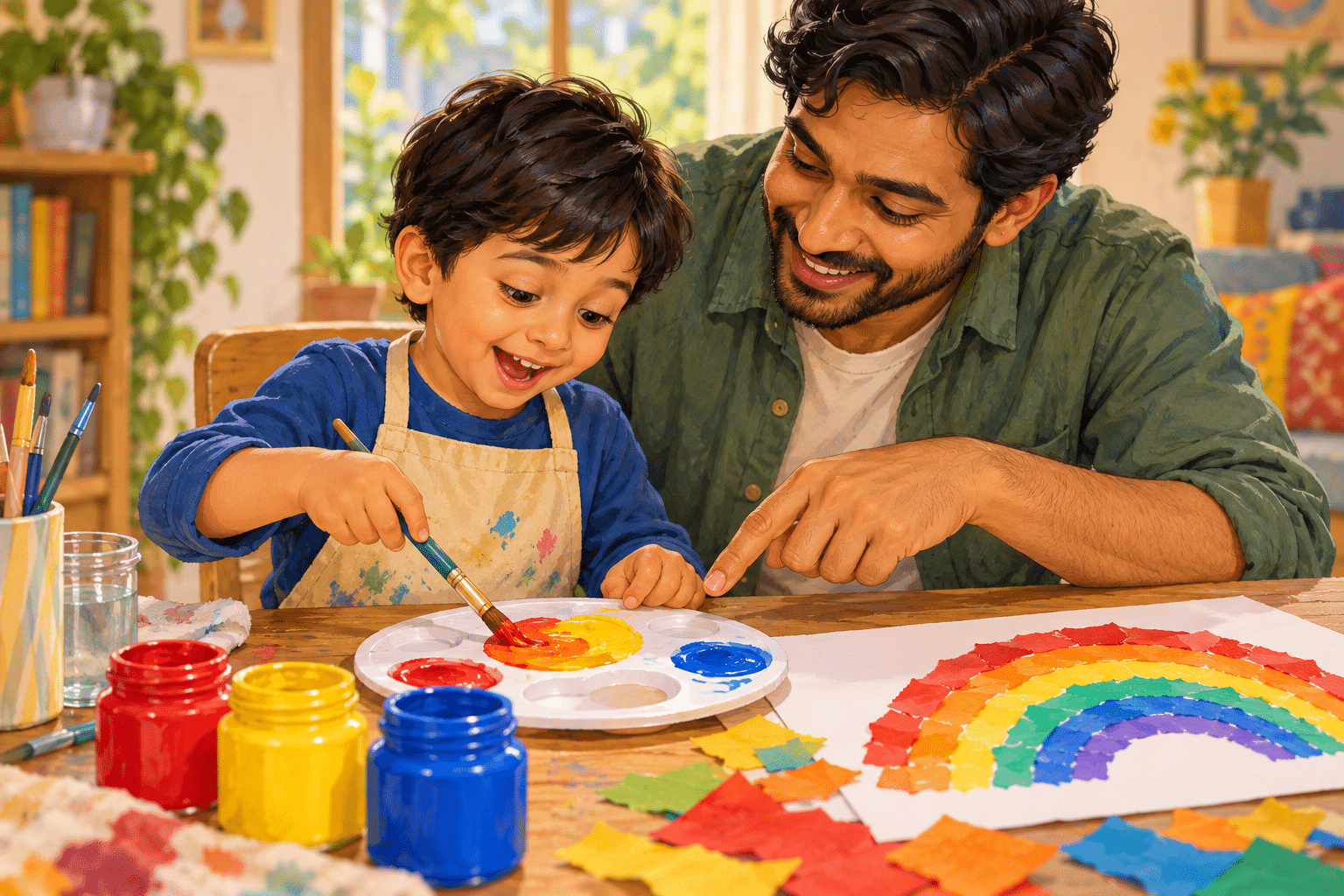
Fun Activity: Colour Mixing Magic
Use washable, child-safe paints in red, yellow and blue.
Let your child mix small amounts.
Explore what happens when different paints are combined.
Ask:
- What do you think will happen?
- What new colour can you see?
- What happens if we add more yellow?
Skills developed: Prediction, experimentation, observation and cause-and-effect thinking.
6. Colours Can Support Emotional Expression
Children sometimes find it difficult to explain how they feel.
Drawing and painting can offer another way to communicate emotions.
Parents can invite children to select colours that represent their feelings, without insisting that a particular emotion must have a particular colour.
For one child, blue may represent calmness. For another, it may represent excitement.
Fun Activity: My Feelings Painting
Give your child a blank sheet and crayons.
Ask:
“If your feelings today were a picture, what would you draw?”
Allow them to explain their choices if they wish.
Skills developed: Self-expression, emotional vocabulary and communication.
Remember that colour choices alone cannot reliably reveal a child’s emotional or psychological state.
7. Colours Introduce Early Mathematics
Colour-based play can introduce counting, patterns, grouping, sequencing and comparison.
These are important foundations for later mathematical learning.
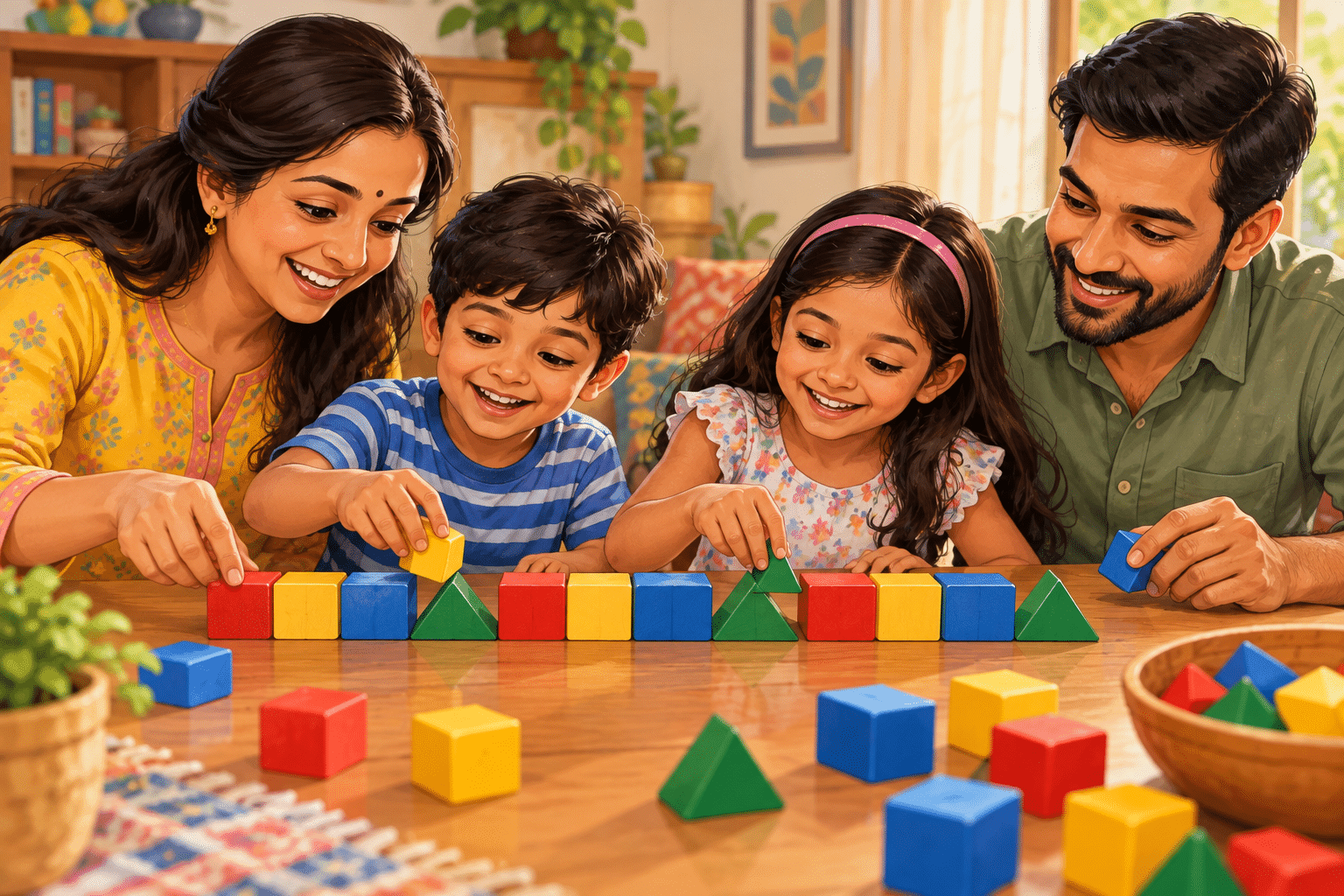
Fun Activity: Make a Colour Pattern
Use large coloured blocks or paper shapes.
Create a simple pattern:
Red – Yellow – Red – Yellow.
Ask your child to continue it.
For older children, try:
Blue – Green – Green – Blue – Green – Green.
Encourage children to create patterns of their own.
Skills developed: Pattern recognition, prediction, counting and logical reasoning.
8. Colours Strengthen Observation Skills
Children can learn to notice small differences in their environment.
A nature walk offers many opportunities for colour exploration.
Look for leaves with different shades of green, flowers with colourful petals, or fruits that change colour as they ripen.
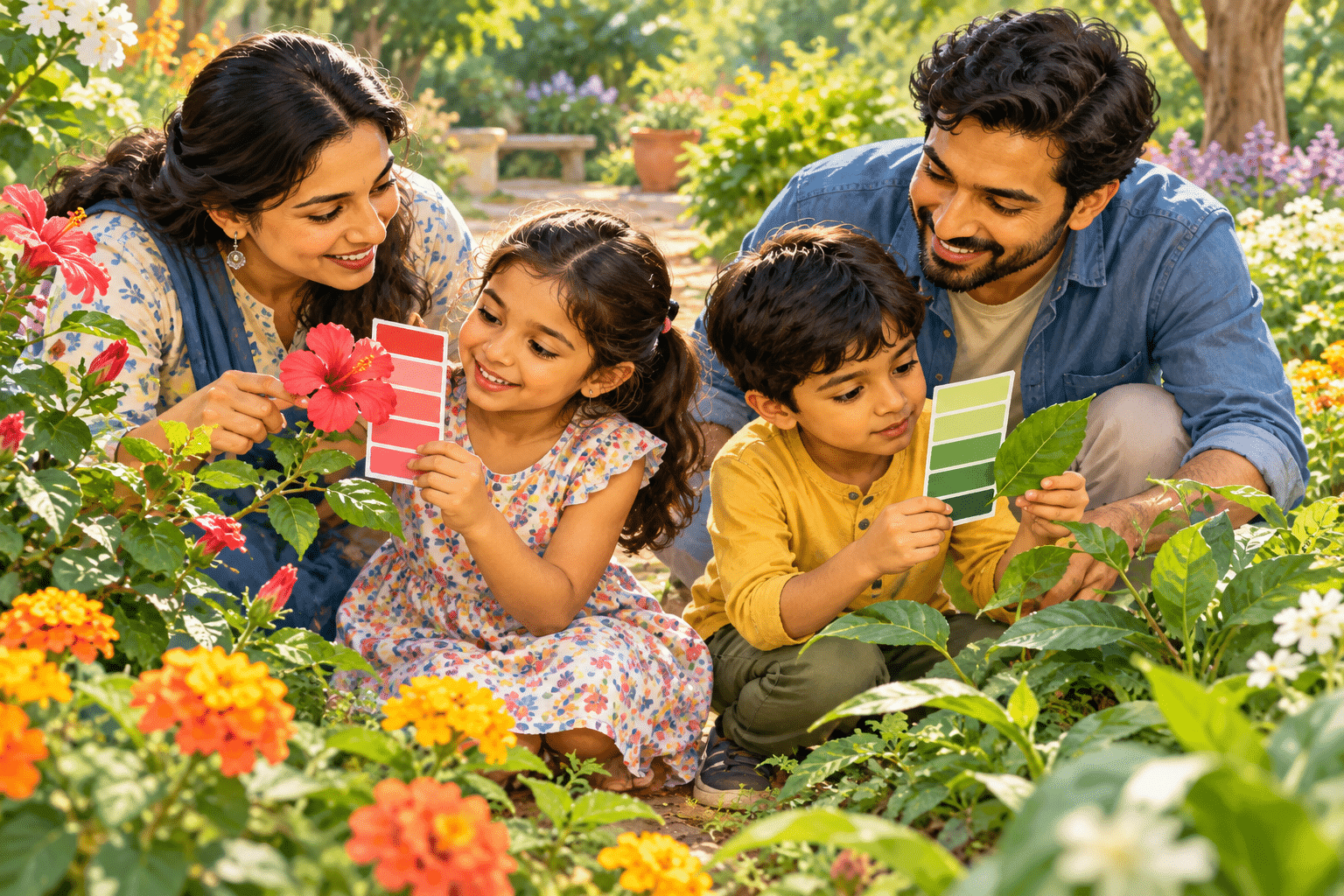
Fun Activity: Nature Colour Walk
Take your child outdoors and ask them to find objects matching a few colour cards.
Discuss:
- Are all green leaves the same shade?
- Why do some leaves become yellow or brown?
- Can one flower have more than one colour?
Skills developed: Observation, comparison, environmental awareness and curiosity.
9. Colours Can Build Confidence Through Creative Achievement
Children often feel proud when they complete a drawing, pattern or craft project.
Colour-based activities provide opportunities to make independent decisions.
Instead of correcting every choice, parents can appreciate the child’s effort and ideas.
Fun Activity: My Colourful Masterpiece
Provide crayons, paper and an open-ended invitation:
“Create anything you imagine.”
Afterwards, ask your child to describe their creation.
Avoid insisting that grass must always be green or the sky must always be blue.
Skills developed: Independence, creativity, decision-making and self-confidence.
10. Colours Connect Learning With Everyday Life
Colour learning becomes especially meaningful when children use it in familiar situations.
Sorting laundry, choosing clothes, arranging toys and preparing food can all become playful learning experiences.
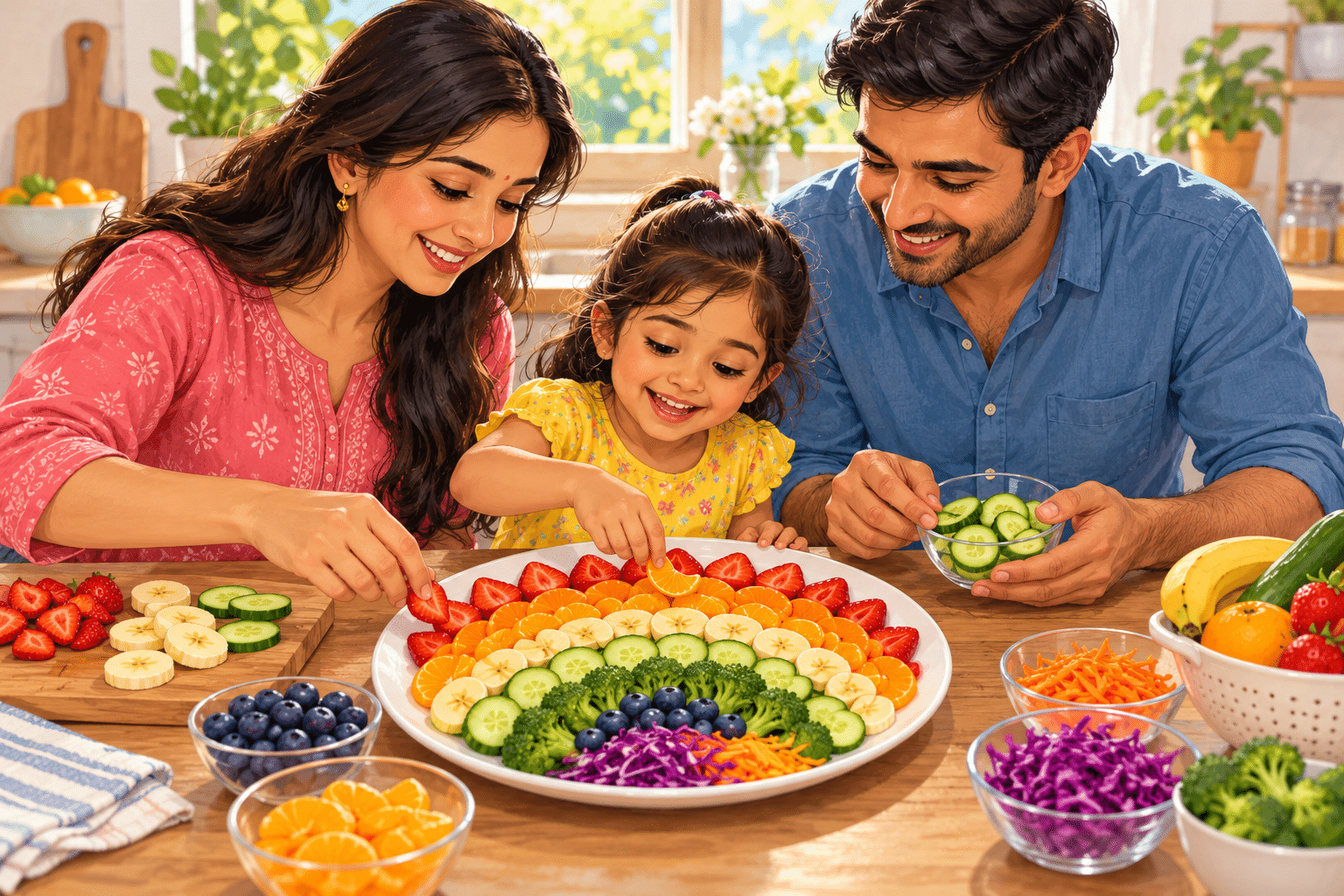
Fun Activity: Rainbow Snack Plate
Create a colourful snack using age-appropriate fruits and vegetables.
For example:
- Red: Tomato or strawberry
- Orange: Carrot
- Yellow: Banana
- Green: Cucumber
- Purple: Grapes cut safely for the child’s age
Invite your child to identify and compare the colours.
Explain that eating a variety of nutritious foods matters more than simply choosing foods based on colour.
Skills developed: Colour recognition, vocabulary, practical life skills and healthy food awareness.
10 More Fun Colour Activities to Try at Home
| Activity | Materials | What Children Practise |
|---|---|---|
| Colour hunt | Household objects | Observation |
| Rainbow painting | Washable paints | Creativity |
| Colour sorting laundry | Clean clothes | Classification |
| Colourful snack making | Fruits and vegetables | Practical life skills |
| Rainbow storytime | Picture books | Language |
| Colour matching cards | Homemade cards | Visual matching |
| Nature colour collection | Leaves and flowers | Environmental awareness |
| Colourful shape puzzles | Paper shapes | Shape recognition |
| Rainbow dance game | Colour cards and music | Movement and listening |
| Colourful family artwork | Crayons and paper | Cooperation and expression |
Colour Learning Activities by Age
Children develop at different rates, so these age ranges are flexible guidelines rather than strict expectations.
Ages 2–3: Discover and Explore
Try pointing out colours in everyday objects, using large washable crayons, looking at colourful picture books and sorting a few safe objects.
Keep activities brief and playful.
Ages 4–5: Match, Name and Create
Introduce simple colour matching, pattern games, finger painting, colour mixing and descriptive vocabulary.
Encourage children to talk about what they create.
Ages 6–8: Observe, Compare and Investigate
Introduce more challenging colour patterns, nature journals, simple art experiments, sorting by two attributes and colourful mathematical models.
Ages 9–10: Design, Experiment and Explain
Encourage children to explore colour combinations in art, create graphs, investigate colour changes in nature and design their own creative projects.
How Parents Can Create a Colour-Friendly Learning Space
You do not need a dedicated study room.
A small, organised corner with a few useful materials can support creative exploration.
Keep crayons, paper, picture books and reusable activity cards within easy reach where appropriate.
Use clear labels and storage containers.
Choose comfortable lighting and avoid overcrowding the area with too many distracting decorations.
Most importantly, allow children opportunities to explore freely.
Five Common Mistakes Parents Should Avoid
1. Forcing children to memorise colours too early
Colour recognition develops gradually. Repetition through enjoyable play is more helpful than pressure.
2. Correcting every unusual colour choice
Imaginative choices are part of creative expression.
3. Buying too many expensive learning materials
Simple household materials often provide excellent learning opportunities.
4. Comparing children with one another
Children develop skills at different rates and may need different types of support.
5. Using colour as the only learning cue
Combine colours with words, shapes, textures and pictures, especially for children with colour-vision differences.
A Simple Seven-Day Colour Learning Plan
| Day | Activity | Learning Goal |
|---|---|---|
| Monday | Find red objects | Recognition |
| Tuesday | Sort colourful toys | Classification |
| Wednesday | Mix washable paints | Experimentation |
| Thursday | Make a rainbow collage | Creativity |
| Friday | Read a colourful picture book | Language |
| Saturday | Go on a nature colour walk | Observation |
| Sunday | Create a family artwork | Collaboration |
Spend approximately 10–20 minutes on an activity if your child is interested. Younger children may prefer shorter sessions.
The aim is enjoyable learning, not completing a fixed schedule.
Frequently Asked Questions
1. At what age do children start learning colours?
Children begin noticing colour differences early, but reliably naming colours develops gradually during the toddler and preschool years.
2. Can colours improve a child’s intelligence?
There is no good reason to assume that exposure to more colours directly increases intelligence. Meaningful colour-based activities can, however, provide opportunities to practise thinking, language and problem-solving skills.
3. Are colourful toys better than ordinary toys?
Not necessarily. The educational value of a toy depends on how children interact with it, not simply how colourful it is.
4. What if my child cannot identify colours correctly?
Colour naming develops at different rates. If you have persistent concerns about your child’s vision or development, discuss them with an appropriate healthcare professional.
5. How can busy parents teach colours?
Use ordinary routines such as getting dressed, preparing meals, arranging toys and walking outdoors.
Conclusion: Every Colour Can Become a Learning Opportunity
Children discover the world through everyday experiences.
A red flower can begin a conversation. A colourful pattern can introduce mathematics. A simple painting can become an opportunity for creative expression.
Parents do not need to turn every moment into a formal lesson.
Instead, they can encourage children to observe, explore, ask questions and enjoy discovering the world around them.
The most important ingredient in colour learning is not an expensive box of crayons. It is a caring adult who makes time to explore alongside a child.
Make room for colourful experiences, meaningful conversations and joyful discoveries.