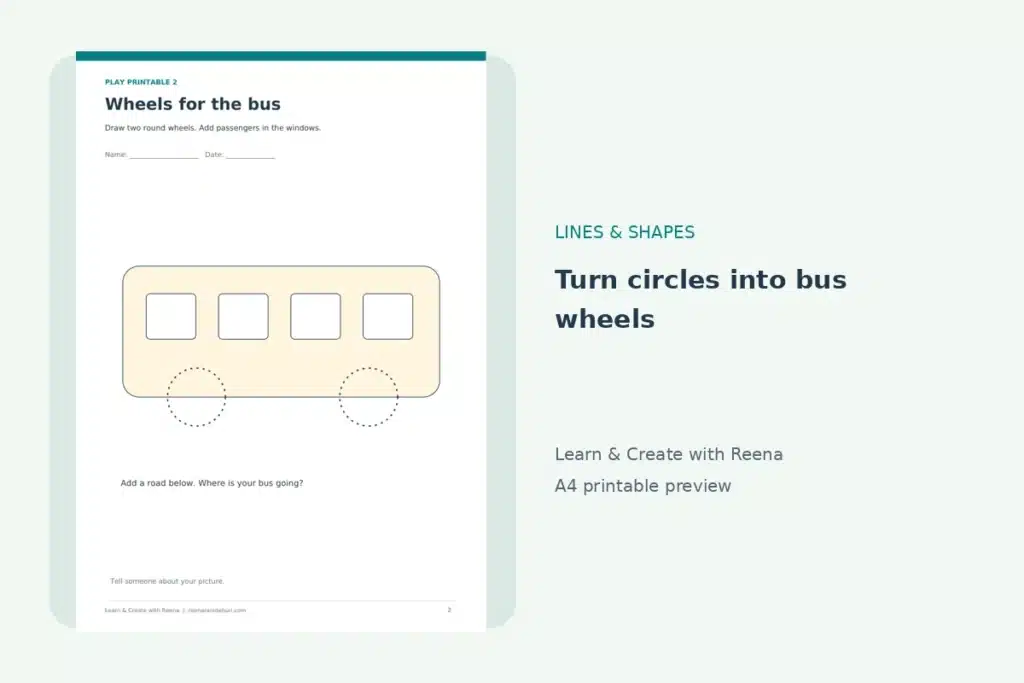
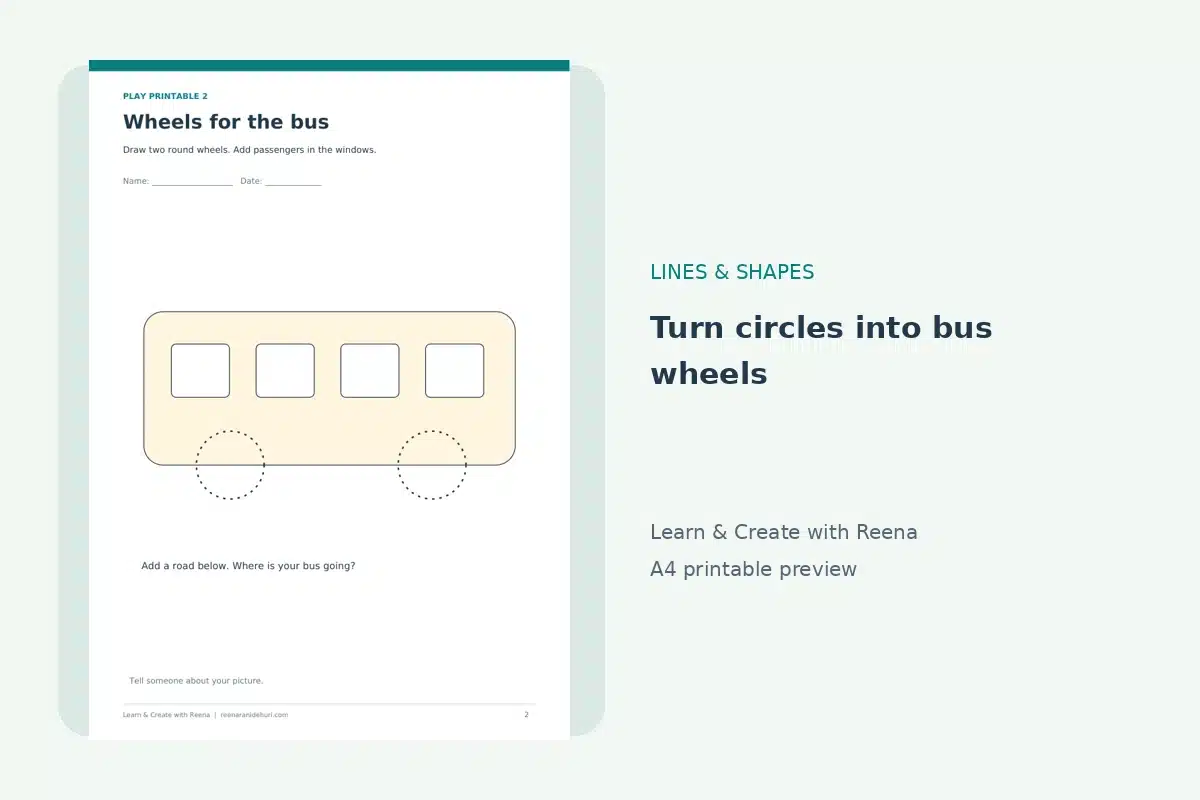
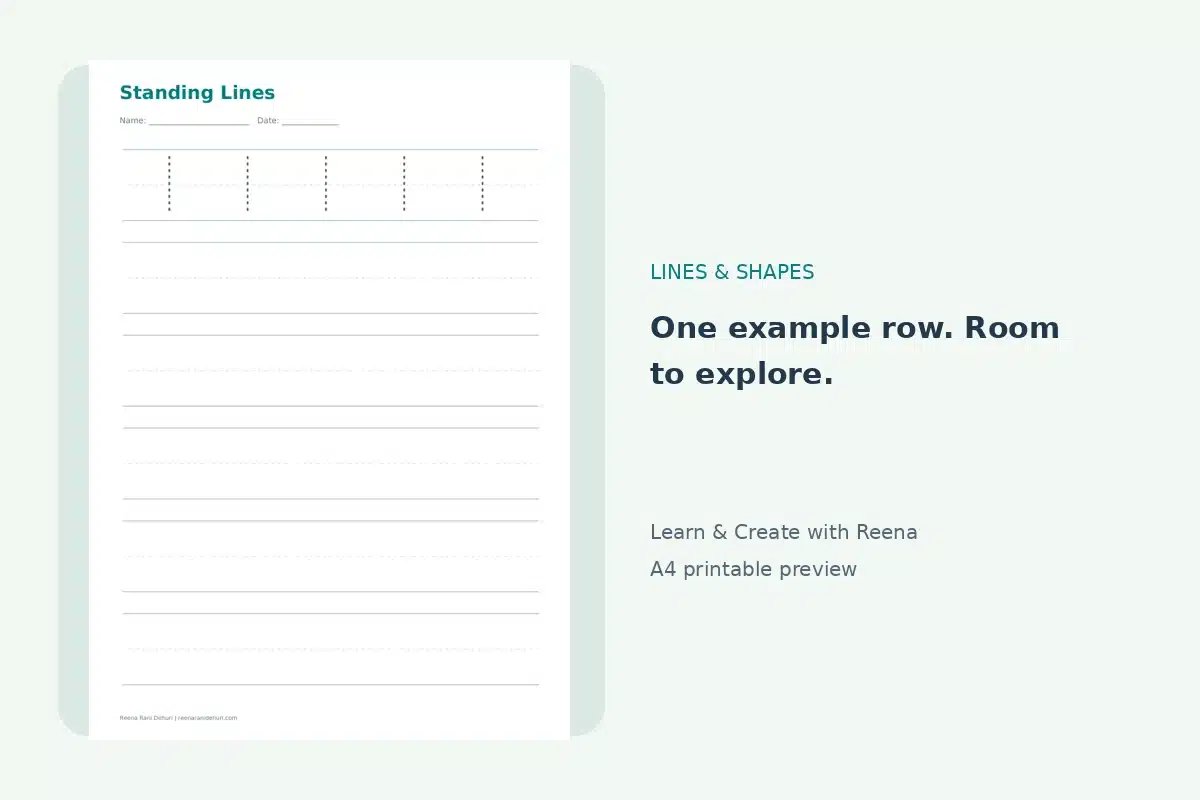
A child brings home a worksheet filled with standing lines, sleeping lines, circles, and curves. A parent may wonder, “Why are they doing this instead of learning the alphabet?”
The answer is that forming letters involves several skills working together. A child needs to guide a tool, control movement, notice shapes, and remember what to make. Simple drawing experiences let children explore some of these demands in manageable ways.
Pre-writing activities can be useful, especially when they feel like play and connect with things your child enjoys.
What Is Your Child Practising?
Think about drawing a circle. Your child has to move around, keep the movement going, and bring the line back towards its beginning.
A straight line presents a different task. The child moves in one direction and then stops. A curve asks for a gradual turn, while a zigzag involves sharper changes.
These movements appear in many drawings, letters, and numerals. Familiarity with them can help children approach more complex forms.
The aim is growing comfort and control. A perfectly straight line is not the measure of a child’s ability or intelligence.
Scribbling Has a Place Too
Some parents worry when a child scribbles instead of following an outline. Yet drawing, scribbling, and letter-like marks are all part of early writing exploration.
NAEYC encourages families to provide varied materials, notice children’s developing marks, and connect drawing with the ideas children want to express.
Ask your child, “Tell me about your picture.”
An untidy-looking page may represent rain, a crowded road, or a family celebration. Listening helps you understand what your child intended.
Try These Simple Activities at Home
1. Paint with Water
Give your child a brush and a small container of water. On a suitable outdoor surface, invite them to paint long lines, circles, or winding paths.
Say, “Can you make a road for your toy car?” Let the activity develop into a picture or a story.
2. Make a Picture Together
Draw a bus without wheels and invite your child to add them. Draw a flower centre and let your child add a stem. Start a face and ask what it needs next.
You are giving a movement a reason.
3. Explore with Dough
Roll dough into long pieces. Use them to make a straight line, a curve, and a circle.
Ask, “What happens when we join the ends?” This allows your child to explore a shape before drawing it.
4. Go on a Line-and-Shape Hunt
Look around your home together:
- Where can you see a standing line?
- Which shelf looks like a sleeping line?
- Can you find a circular outline?
- Where does a path or handle curve?
Use these observations as invitations to draw later.
5. Draw Big, Then Try Smaller
Offer a large sheet for broad movements. When your child is comfortable, invite a smaller version nearby.
There is no need to fill the page. One enjoyable attempt can be enough to begin a conversation.
Keep Practice Short and Flexible
Choose a relaxed moment. A few enjoyable minutes may suit your child better than a long session. Continue while the child is comfortable and interested; pause when they become tired or frustrated.
Offer a choice: “Would you like chalk or crayons?” or “Shall we draw waves or wheels?”
A choice gives your child a role in the activity.

Make Drawing Comfortable
Provide a stable surface, enough room to move, and drawing tools your child can manage. A short, chunky crayon may be worth trying.
Children’s ways of holding tools develop over time. Allow your child’s preferred hand, including the left hand, rather than forcing a change. See NHS guidance on getting ready to write.
If the paper moves around, you can help secure it while your child draws.
Encourage Effort with Specific Words
Instead of commenting only on neatness, describe what you notice:
“You made that curve go all the way around.”
“You tried drawing it by yourself.”
“You added a small wheel and a big wheel.”
These comments show that you are paying attention to the process. Avoid comparing your child’s page with a sibling’s or classmate’s work.
Connect Drawing with Real Writing
Let your child see you make a shopping list, write a note, or label a container. Explain what you are doing and invite a contribution.
Your child might draw the fruit for a shopping list or add marks to a greeting card. NAEYC recommends everyday writing experiences and displaying children’s work to show that their contributions matter.
Letters and names can be explored alongside lines and shapes. Your child does not need a page of perfect circles before being allowed to try meaningful writing.
When More Support May Help
If drawing repeatedly causes pain, marked difficulty, or distress, discuss what you notice with your child’s teacher and a qualified child-health professional. Together, you can consider suitable support.
At home, your most useful contribution is a welcoming invitation: “Let’s make something together.” A child who feels listened to has a reason to keep creating.